Emergency Dispatch: Standing water or frozen pipes? Call (855) 499-4130 now to route an emergency plumber.
First Hour Emergency Protocol
- Shut off main water valve immediately.
- Cut electrical power to wet spaces.
- Open faucets to drain residual line pressure.
- Call 24/7 dispatch at (855) 499-4130
Specialized Methods & Sub-Services
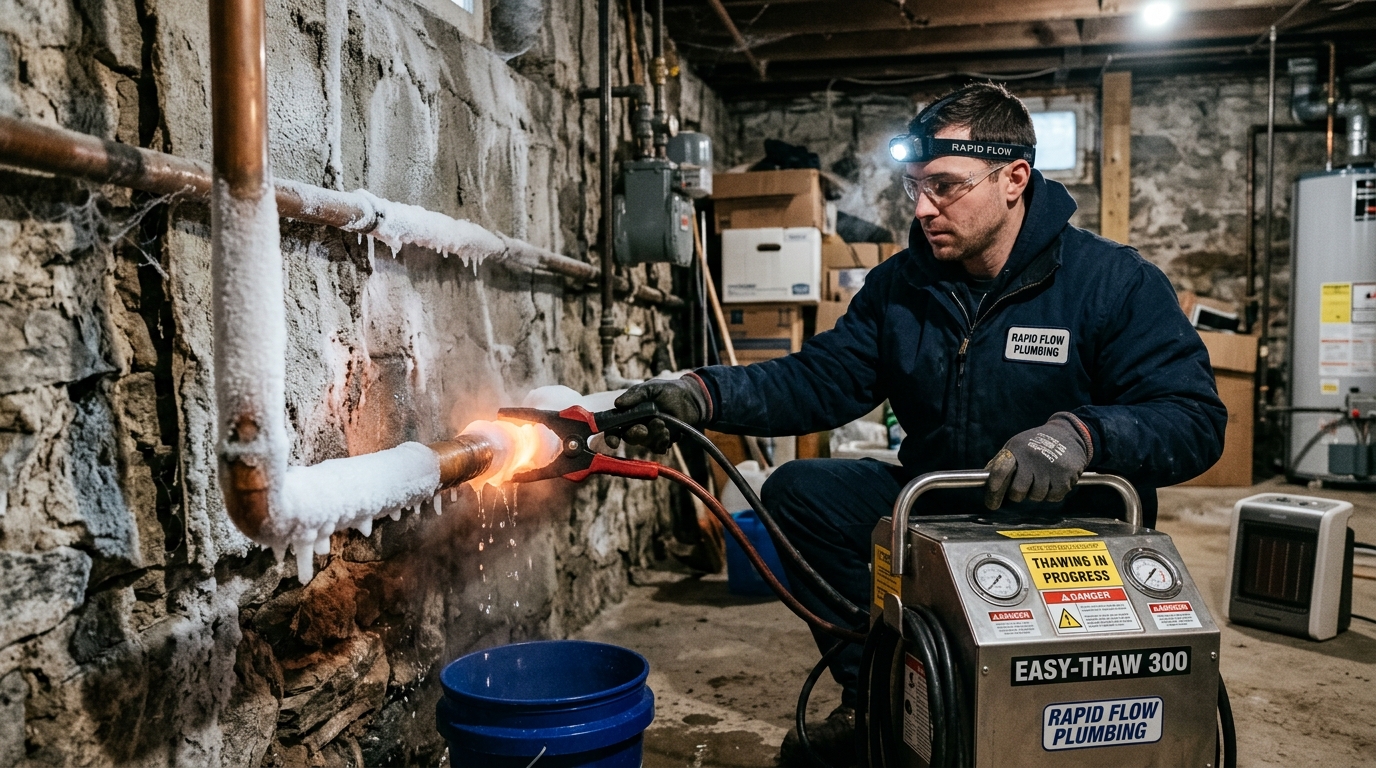
Professional Pipe Thawing
Never use open-flame blowtorches or propane torches to thaw frozen lines, which triggers hundreds of catastrophic residential fires eac...
Burst Frozen Pipe Repair
Often homeowners only realize a pipe has burst after the ice thaws and high-pressure water surges out of the newly opened split. Our ne...
Pricing Guidelines & Cost Benchmarks
The estimated price range for this service is $250 – $1,200 (Thawing: $250 – $600; Sectional repair: $450 – $1,200). For a detailed cost breakdown by scenario and state, review our dedicated guide: View Full Cost Guide →
Repair vs. Full Replacement
Isolated punctures can be repaired with sectional splicing, while widespread age corrosion warrants complete line repiping.
Frequently Asked Questions
Can I thaw a frozen pipe myself with a blowtorch?
No. Never use an open flame blowtorch, propane heater, or charcoal burner to thaw frozen pipes. Open flames ignite dry wood studs, framing, and insulation inside wall cavities. Instead, keep faucets cracked open and use gentle heat sources like a hair dryer, or call a professional.
Why do pipes burst when they freeze?
Pipes do not burst primarily where the ice forms, but downstream between the ice blockage and a closed faucet. As water freezes, it expands by 9% in volume. This expansion pushes trapped liquid water into an enclosed space, driving hydrostatic pressure past 3,000 PSI until the pipe wall splits.